


























Five Giants Driving Global Trade
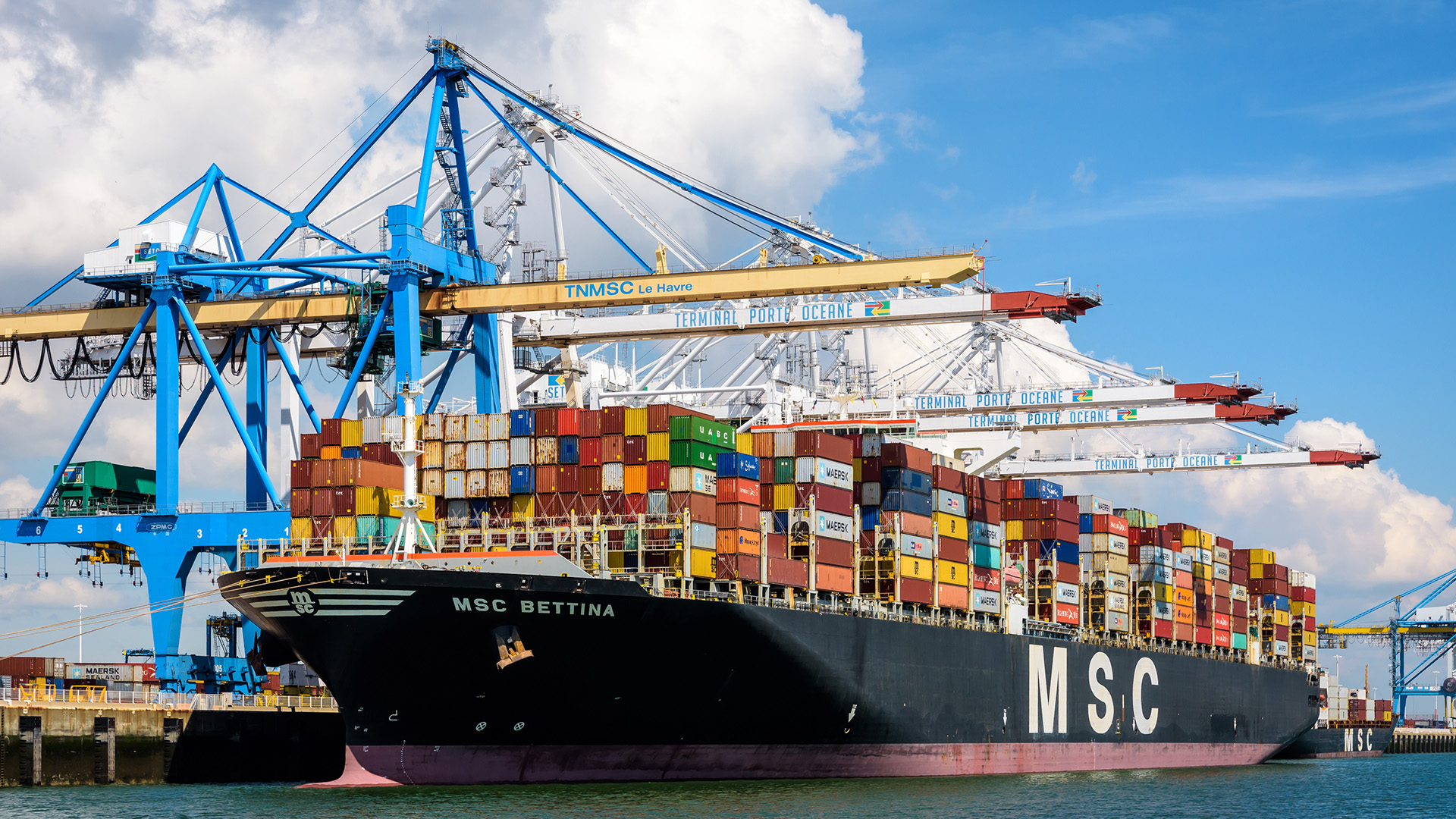
Maritime shipping companies form the backbone of international commerce, ensuring the seamless and cost-efficient movement of goods across the globe. These industry giants play a vital role in sustaining global supply chains, a fact underscored by the sector’s record-breaking performance in 2025, when container shipping lines reported $26.8 billion in net profits during the third quarter alone, a 164% increase from the previous quarter.
Among the most influential players in the industry is the Mediterranean Shipping Company (MSC). Founded in Naples, Italy, in 1970 and now headquartered in Geneva, Switzerland, MSC has grown into the world’s largest container shipping company.
Operating a fleet of around 900 vessels with a combined capacity of 5.5 million twenty-foot equivalent units (TEUs), MSC uses a blend of owned and chartered ships to remain operationally agile. Its flagship vessels, MSC Tessa and MSC Irina, each capable of carrying more than 24,000 TEUs, rank among the largest container ships in existence. MSC also integrates land logistics into its operations, offering end-to-end solutions that enhance its dominance in global trade.
Another global heavyweight is Maersk Line, a Danish company established in 1928 and based in Copenhagen. With a fleet of over 700 container ships totaling 4.1 million TEUs in capacity, Maersk connects 374 ports across 116 countries. Its cutting-edge Triple-E Class vessels, each able to carry 18,000 TEUs, reflect the company’s focus on operational efficiency and environmental responsibility.
Maersk is a pioneer in sustainability within the shipping sector, with an ambitious commitment to achieve net-zero emissions by 2040, all while maintaining leadership on key routes like the trans-Pacific and trans-Atlantic corridors.
The CMA CGM Group, headquartered in Marseille, France, holds the position of the world’s third-largest container shipping company. It serves 160 countries and connects 420 ports operating a fleet of over 650 vessels with a total capacity of 5 million TEUs. Each year, CMA CGM moves more than 23.6 million TEUs and complements its maritime operations with a robust inland logistics network, including 1,000 warehouses and 400 offices. This integrated model allows for comprehensive, streamlined supply chain solutions.
Ranking fourth is COSCO Shipping Lines, based in Shanghai, China. COSCO boasts a uniquely diversified fleet, comprising 504 container ships, 436 bulk carriers, 229 oil and gas tankers, and 180 specialized cargo vessels. This variety enables the company to efficiently manage a wide range of cargo types. COSCO's extensive network spans major global trade corridors, ensuring dependable, cost-effective shipping solutions for exporters worldwide.
Finally, Hapag-Lloyd, headquartered in Hamburg, Germany, is the world’s fifth-largest container shipping company. It operates a fleet of 299 vessels—129 owned and 171 leased—with a total capacity of 2.34 million TEUs. Renowned for its service reliability and competitive freight rates, Hapag-Lloyd remains a trusted logistics partner for businesses navigating the complexities of international trade.
Together, these five shipping companies not only move the majority of global container traffic but also drive innovation, sustainability, and strategic connectivity in the maritime logistics sector.