

























US, DBSA Finance Strategic Lobito Corridor Railway Modernization
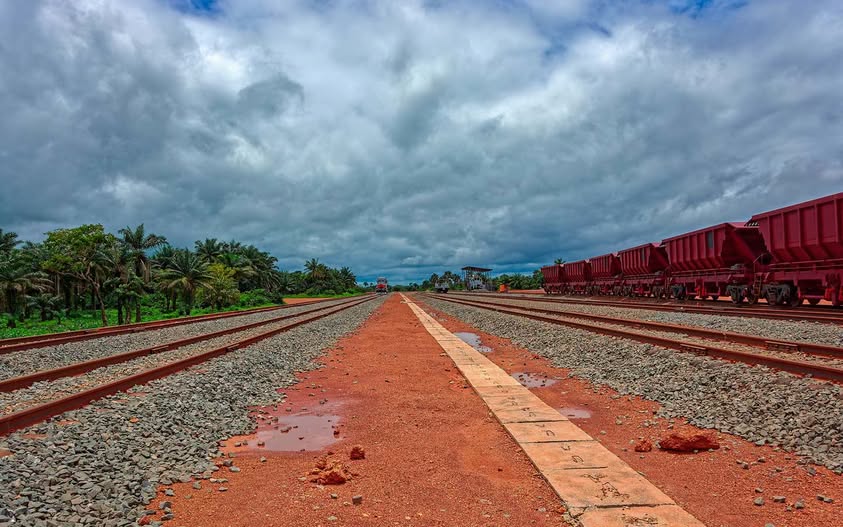
The US International Development Finance Corporation (DFC) and the Development Bank of Southern Africa (DBSA) have reached financial close on a $753 million financing package to rehabilitate Angola's strategically important Lobito Corridor railway, a major export route for copper, cobalt, and other critical minerals from Central Africa.
The funding will support the upgrade of the 1,300-kilometre railway linking the Port of Lobito on Angola's Atlantic coast to Luau, near the border with the Democratic Republic of Congo (DRC). It will also finance the rehabilitation of the port's mineral export terminal.
The financing package consists of a $553 million 15-year senior secured loan from the DFC and a $200 million loan from the DBSA. Although the agreement was signed in December 2025, the project reached financial close early tt week, his month, allowing the full rehabilitation programme to move ahead.
The Africa Finance Corporation (AFC), which advised on the transaction alongside investment bank Eaglestone, said the financing will enable the complete modernization of the railway and its supporting infrastructure.
Lobito Atlantic Railway (LAR), the project company and borrower, has operated the corridor since 2024 under a 30-year concession. LAR is a joint venture between commodities trader Trafigura and Portuguese construction company Mota-Engil.
According to AFC, the railway transported more than 200,000 tons of cargo in 2025, with freight volumes expected to increase significantly as the upgrades are completed.
The rehabilitation programme includes repairs to the railway line, bridges, stations, and crossing loops, as well as new signaling and telecommunications systems.
The project will also establish a modern operations control centre, upgrade maintenance workshops in Lobito, Huambo, Cubal, and Luau, improve freight terminals at Lobito and Luau, and restore the mineral export terminal at the port.
AFC said its advisory role covered the entire financing process, including structuring the funding, preparing the project for lender due diligence, coordinating negotiations with the DFC and DBSA, and helping conclude the financing documentation. The institution also advised on concession agreements and the project's security structure.
The Lobito Corridor is increasingly viewed as one of Africa's most important transport projects because it provides the shortest rail route from the DRC's mineral-rich Copperbelt to international markets through the Atlantic Ocean.
The corridor is expected to play a growing role in global supply chains for critical minerals used in electric vehicles, renewable energy technologies, and electronics.
Infrastructure analysts expect the corridor to reshape trade flows across Southern and Central Africa by improving regional connectivity, reducing transport costs and expanding export capacity.
AFC President and Chief Executive Samaila Zubairu said the investment would strengthen regional trade links and create new economic opportunities across Angola and neighbouring countries while supporting the development of one of the continent's most strategic transport corridors.