


























World Bank Weighs Second Phase of Dar es Salaam Port Upgrade
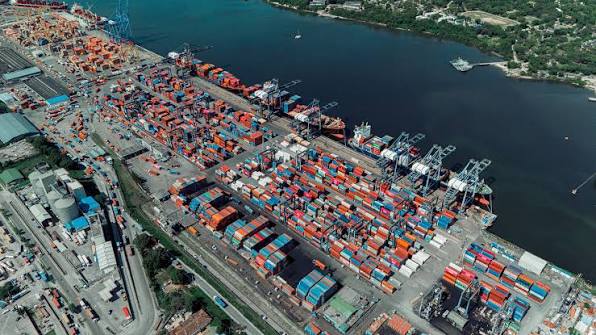
The World Bank is considering financing a second phase of improvements at Dar es Salaam Port after the first phase delivered major gains in cargo handling capacity and operational efficiency.
The first phase of the Dar es Salaam Maritime Gateway Project is now about 85 per cent complete and has helped increase the port’s annual cargo throughput from 14 million tonnes in 2015/16 to 32.8 million tonnes in 2025/26.
The potential second phase is expected to focus on further improving the port and strengthening the wider Central Corridor, which links Tanzania’s maritime gateway with land-linked markets in East and Central Africa.
World Bank Regional Vice President for Eastern and Southern Africa Ndiamé Diop announced the institution’s interest in further supporting the port and corridor during a three-day working visit to Tanzania.
During a tour of Dar es Salaam Port, Dr Diop said the first phase had generated significant efficiency improvements, including shorter vessel turnaround times and faster cargo operations.
The gains are expected to strengthen the port’s position as a gateway for Tanzania and neighbouring land-linked countries that depend on the Central Corridor for access to international markets.
Tanzania Ports Authority (TPA) Director General Plasduce Mbossa said World Bank technical and financial support had contributed to improved service delivery and enhanced the port’s competitiveness in the regional market.
The first phase is being implemented under the Dar es Salaam Maritime Gateway Project, which the World Bank approved in 2017.
The project is backed by a $345 million International Development Association credit and a $12 million grant from the United Kingdom’s development agency, alongside government funding that brought the total project cost to about $421 million.
Key works include deepening and strengthening berths 1 to 7, dredging the entrance channel and turning basin to accommodate larger vessels, construction of a roll-on/roll-off terminal and improvements around Gerezani Creek.
The infrastructure upgrades are designed to allow the port to handle larger vessels while increasing cargo-handling efficiency and reducing vessel and cargo delays.
The proposed next phase comes as Tanzania seeks to transform the Central Corridor from a conventional transport route into a broader economic corridor supporting trade, manufacturing, mining, agriculture and logistics.
Dr Diop held talks with Finance Minister Khamis Mussa Omar, where the World Bank indicated that its future engagement would extend beyond transport infrastructure to activities along the Central Corridor.
The proposed approach would link transport infrastructure with productive sectors, including agriculture, agro-processing, mining, manufacturing and logistics.
The World Bank is also expected to support efforts to extend railway connectivity towards Burundi, potentially opening additional markets to Dar es Salaam Port.
The development of the Central Corridor is particularly important for Tanzania's ambition to strengthen Dar es Salaam as a regional logistics hub serving both domestic and transit cargo.
President Samia Suluhu Hassan has described the country's railway, port and road investments as components of a wider economic corridor intended to stimulate industrial development, agriculture, logistics and regional trade.
She said Tanzania's geographical position allows it to serve markets across East, Central and Southern Africa.
“The SGR project is more than a railway. We see it as an economic corridor that can stimulate industries, agriculture, logistics, new urban centres and regional trade,” President Samia said.
The government is separately investing heavily in the SGR network, which is intended to improve the movement of passengers and freight between Dar es Salaam and Tanzania's hinterland.
The railway is being funded through government resources and commercial borrowing, including syndicated financing arranged with development and commercial lenders.
The World Bank's railway involvement is focused on the existing metre-gauge network through the Tanzania Inter-modal and Rail Development Project.