


























AFC Selects Preferred Contractors for 830km Zambia–Angola Lobito Rail
The Africa Finance Corporation (AFC) has selected preferred contractors for the construction of an 830-kilometre railway linking Zambia to Angola’s Atlantic coast, marking a major milestone in efforts to strengthen regional transport connectivity and trade.
AFC, the project’s lead sponsor and developer, announced that two international construction consortia had been selected following a competitive international tender for the Engineering, Procurement and Construction (EPC) contracts.
The consortium comprising Italy’s Webuild S.p.A., Portugal’s Mota-Engil and Türkiye’s IC İçtaş Construction has been selected as the preferred bidder for the Zambian section. For the Angolan section, Portugal’s Mota-Engil will partner with Brazil’s Odebrecht Engineering and Construction.
Contract negotiations are expected to begin in November 2026, with the parties targeting the conclusion of EPC agreements within eight to 12 weeks, subject to satisfactory technical, commercial and legal negotiations.
The railway is a central component of the Lobito Corridor, a strategic transport initiative designed to connect mineral-rich regions of Central and Southern Africa to international markets through Angola’s Port of Lobito on the Atlantic Ocean.
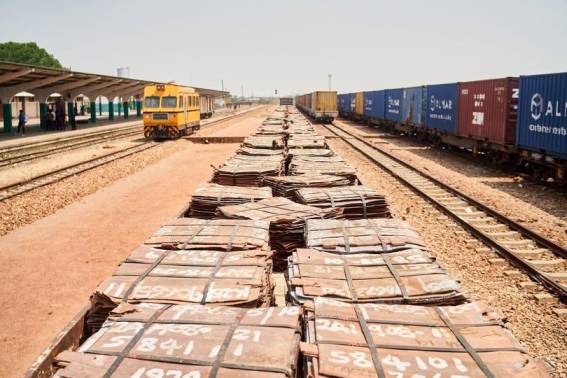
For land-linked Zambia and neighbouring countries, the project is expected to provide an alternative export route for copper, cobalt and other strategic minerals, while improving opportunities for agricultural trade and industrial development.
By reducing logistics costs and improving access to global markets, the railway is expected to strengthen regional integration, encourage investment in processing industries and enable African economies to retain more value from their natural resources.
Samaila Zubairu, AFC President and Chief Executive Officer, said the project would help connect African resources to production centres and consumers while creating opportunities for industrialization and employment.
“The Zambia Lobito Railway will help build competitive battery mineral and agricultural value chains, anchoring new industrial cities and creating jobs along the corridor,” he said.
Zubairu added that the selection of preferred contractors bring the project closer to implementation, with AFC working alongside its partners to expand Africa’s productive capacity and trade.
The latest announcement builds on cooperation initiated in October 2023, when the governments of Angola and Zambia, the European Union, the United States Government, the Government of Italy and the African Development Bank signed a Memorandum of Understanding supporting the development of the Lobito Corridor.
Subsequent milestones have included the completion of feasibility and technical studies, the signing of concession agreements in 2024, intergovernmental agreements in 2025 and preliminary engineering designs.
AFC is developing the project through Trans African Rail Company FZCO, the project holding company, alongside the project companies Zambia Lobito Railway Limited and Zambia Lobito Railway S.A.
Environmental and Social Impact Assessments and Resettlement Action Plans have also advanced as part of preparations for implementation and the competitive procurement process.
The project has attracted additional international support through Italy’s Mattei Plan for Africa, an initiative aimed at strengthening economic partnerships and investment between Italy and African countries.
As part of this support, Italian development finance institution CDP has established a €250 million financing facility backed by Italian export credit agency SACE to support Italian participation in infrastructure projects, including the railway.
The railway is expected to improve freight movement between Zambia’s mineral-producing areas and Angola’s Atlantic coast, providing exporters with another route to international markets.
Beyond mineral exports, the corridor could support agricultural value chains, stimulate investment in logistics and industrial infrastructure, and create employment in communities along the railway.
For regional economies, improved rail connectivity could also strengthen cross-border commerce by linking production centres to ports and reducing dependence on longer or more costly transport routes.
The project’s progress comes amid growing efforts across Africa to develop integrated transport corridors that connect ports, railways, roads and industrial centres to facilitate intra-African trade and international commerce.
The selection of preferred EPC bidders represents a significant step towards construction, although the contracts remain subject to negotiations and the completion of the requirements.
AFC has reaffirmed its commitment to working with its partners to mobilize capital and advance the railway towards implementation, with the ultimate objective of improving connectivity, supporting industrialization and unlocking economic opportunities across the Lobito Corridor.