


























Kenya Seeks Investment to Unlock Untapped Potential of Blue Economy
Kenya is seeking to attract fresh investment into its maritime sector through a proposed Maritime Investment Policy and Incentive Regime aimed at unlocking the economic potential of its ocean and inland water resources, expanding industrial capacity and creating employment across the blue economy.
The framework identifies shipping, shipbuilding, ship repair, port infrastructure, maritime logistics, fisheries, aquaculture, marine tourism, maritime education and digital innovation as priority investment areas, signaling a shift towards developing a more diversified maritime economy beyond traditional port operations.
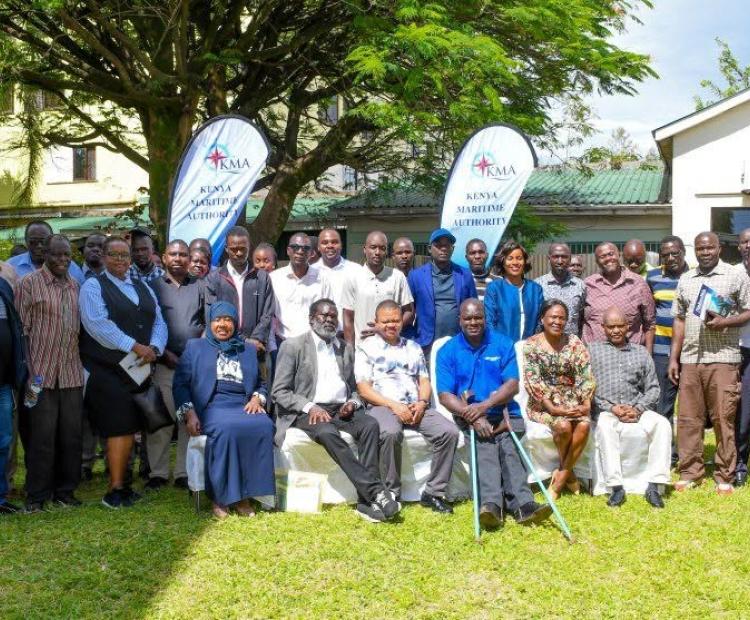
The initiative was the focus of a public participation and stakeholder engagement forum held recently in Kisumu, where Principal Secretary for Shipping and Maritime Affairs Aden A. Millah, represented by Secretary Administration Fauzia Suleiman, said the policy would provide a strategic pathway towards attracting investment and strengthening Kenya's position as a regional maritime hub.
Despite its strategic location along major international shipping routes and access to the Indian Ocean and inland waterways, Kenya has yet to fully exploit the economic opportunities offered by its maritime resources. High capital requirements, limited access to financing, infrastructure gaps, regulatory challenges, and inadequate private sector participation have constrained investment in several segments of the industry.
The proposed framework seeks to address these barriers through a predictable and investor-friendly environment supported by fiscal, financial and non-fiscal incentives. It also aims to promote public-private partnerships, improve access to development financing and develop the specialized skills required to support maritime industrialization.
The potential for investment is underlined by the growing volumes of cargo handled at the country's ports. According to the Kenya National Bureau of Statistics' 2026 Economic Survey, the Port of Mombasa handled 45.45 million metric tonnes of cargo in 2025, up from 40.99 million tonnes in 2024, representing growth of 10.9 per cent. Container traffic reached 2.11 million TEUs, while transit cargo increased by 19.5 per cent to 15.88 million tonnes.
This expansion creates opportunities beyond cargo handling, particularly in shipping, freight forwarding, marine insurance, ship agency, bunkering, cargo consolidation and vessel maintenance. Investment in locally owned shipping companies, vessel acquisition and management could also increase Kenya's participation in regional and international cargo transportation, allowing domestic businesses to capture more value from the growing maritime trade.
Fisheries and aquaculture offer another major investment frontier, particularly along the Indian Ocean coastline and around Lake Victoria. Kenya's fish production increased to 189,150 metric tonnes in 2025, valued at approximately KSh54.9 billion, compared with 168,424 tonnes worth KSh39.6 billion in 2024, according to the State Department for the Blue Economy and Fisheries.
Kisumu is well positioned to benefit from this expansion through investments in fish-processing facilities, cold-chain infrastructure, fish feed manufacturing, boat construction and lake transport. The Port of Kisumu handled 496,516 metric tonnes of cargo in 2025, compared with 295,516 tonnes in 2024, pointing to renewed opportunities in inland water transport and regional trade.
The proposed policy's emphasis on shipbuilding and ship repair complements existing opportunities by opening the way for Kenya to develop domestic maritime manufacturing capacity. Investment in vessel construction, dry-docking, fabrication and marine engineering would reduce dependence on foreign shipyards while supporting shipping, fishing and port operations. It would also create employment for naval architects, engineers, welders and marine technicians.
Along the coast, port infrastructure and marine tourism provide additional avenues for private investment. Beyond cargo terminals, opportunities exist in logistics parks, specialised warehouses, bunkering facilities and digital cargo management systems, particularly around Mombasa and the emerging Port of Lamu.
Mombasa, Lamu, Kilifi and Kwale also offer prospects in cruise tourism, recreational boating, marinas, sport fishing and waterfront developments. Investment in passenger vessels, cruise facilities and supporting hospitality infrastructure could diversify coastal tourism products and expand employment opportunities.
Realising these opportunities will require parallel investment in maritime education, research and technology. Training institutions, simulation centres and specialised technical programmes will be essential in preparing Kenyans for careers in vessel operations, marine engineering, port management and maritime logistics.