


























Tanzania Takes Over Lake Tanganyika Leadership Amid Fish Stocks Decline
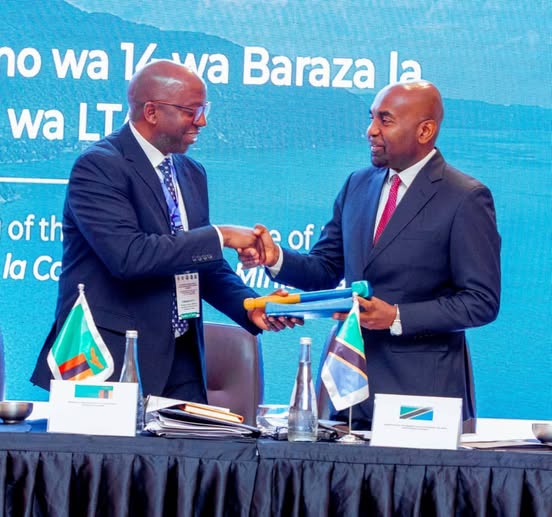
Tanzania has assumed the chairmanship of the Lake Tanganyika Authority (LTA) Council of Ministers, pledging stronger regional cooperation to address declining fish stocks, rising water levels and growing environmental threats facing the world's second-deepest freshwater lake.
Minister of State in the Vice-President’s Office (Union and Environment), Hamad Yussuf Masauni, received the chairmanship from Zambia during the 14th Ordinary Meeting of the LTA Council of Ministers held in Dar es Salaam on October 30, 2026.
Mr Masauni said Tanzania would use its tenure to strengthen coordination among Burundi, the Democratic Republic of Congo (DRC), Tanzania and Zambia, the four countries sharing the lake, to tackle environmental degradation and improve the livelihoods of communities dependent on its resources.
He described Lake Tanganyika as a shared natural asset of immense ecological, economic and social importance, providing food, employment and income while supporting internationally significant biodiversity.
“Tanzania’s priorities will include strengthening regional cooperation, promoting integrated management of the lake and its basin, and addressing pollution, unsustainable fishing, land degradation and the effects of climate change,” he said.
The minister also called for sustainable financing to implement the Authority's programmes and projects, urging member states to meet their financial obligations while development partners provide continued financial, technical and technological support.
He said Tanzania would also promote sustainable fishing, improve sanitation services, prevent water pollution and increase the participation of women, young people and lakeside communities in development initiatives.
“Protecting Lake Tanganyika requires collective responsibility. No single country can successfully conserve this shared water body acting alone,” he said.
Zambia's Permanent Secretary in the Ministry of Blue Economy and Environment, Dr Douty Chibamba, said the Authority's performance should be measured by tangible improvements in environmental protection, community livelihoods and regional development rather than the number of resolutions adopted.
He called for ministerial decisions to translate into practical action through clear allocation of responsibilities, adequate resources, and effective programme monitoring and evaluation.
LTA Executive Director Dr Emma Liwenga said environmental conservation must go hand in hand with improving community livelihoods and strengthening the economies of countries surrounding the lake.
The leadership transition comes amid growing concerns over the lake's ecological health, particularly declining fish stocks, rising water levels, pollution and the effects of climate change.
A regional fish-stock assessment conducted in 2025 and 2026 estimated pelagic fish biomass at approximately 1,600 tonnes, down from 3,500 tonnes recorded in 1998, representing a decline of about 62 per cent.
The assessment, the first lake-wide exercise since 1998, provides fresh evidence of the pressure on the lake's fisheries and the need for coordinated management across the four countries.
The LTA is pursuing harmonized fishing regulations, improved vessel registration and licensing, stronger controls on fishing gear, seasonal fishing closures and better collection and sharing of fisheries data.
Regional fisheries experts from the four countries met in Kigoma, Tanzania, from September 29 to October 2 to review enforcement measures and strategies for rebuilding fish stocks.
The meeting endorsed harmonized Standard Operating Procedures for lake and land patrols, subject to the incorporation of comments from member states. It also reviewed the impact of the annual biological fishing closure, which runs from May 15 to August 15, and called for stronger monitoring, control and surveillance.
The experts further recommended alternative livelihood programmes for fishing communities to reduce pressure on the lake's resources.
Beyond fisheries, the Authority is strengthening its regional environmental management framework through a review of its Strategic Action Programme (SAP).
The LTA and Germany's development agency GIZ held a technical workshop in Dar es Salaam from October 7 to 9 to review the revised programme, which provides a framework for cooperation on biodiversity conservation, pollution control, fisheries management and sustainable use of the lake basin.