


























Tanzania, Kenya and Botswana Bring Complementary Strengths to Proposed Maritime University
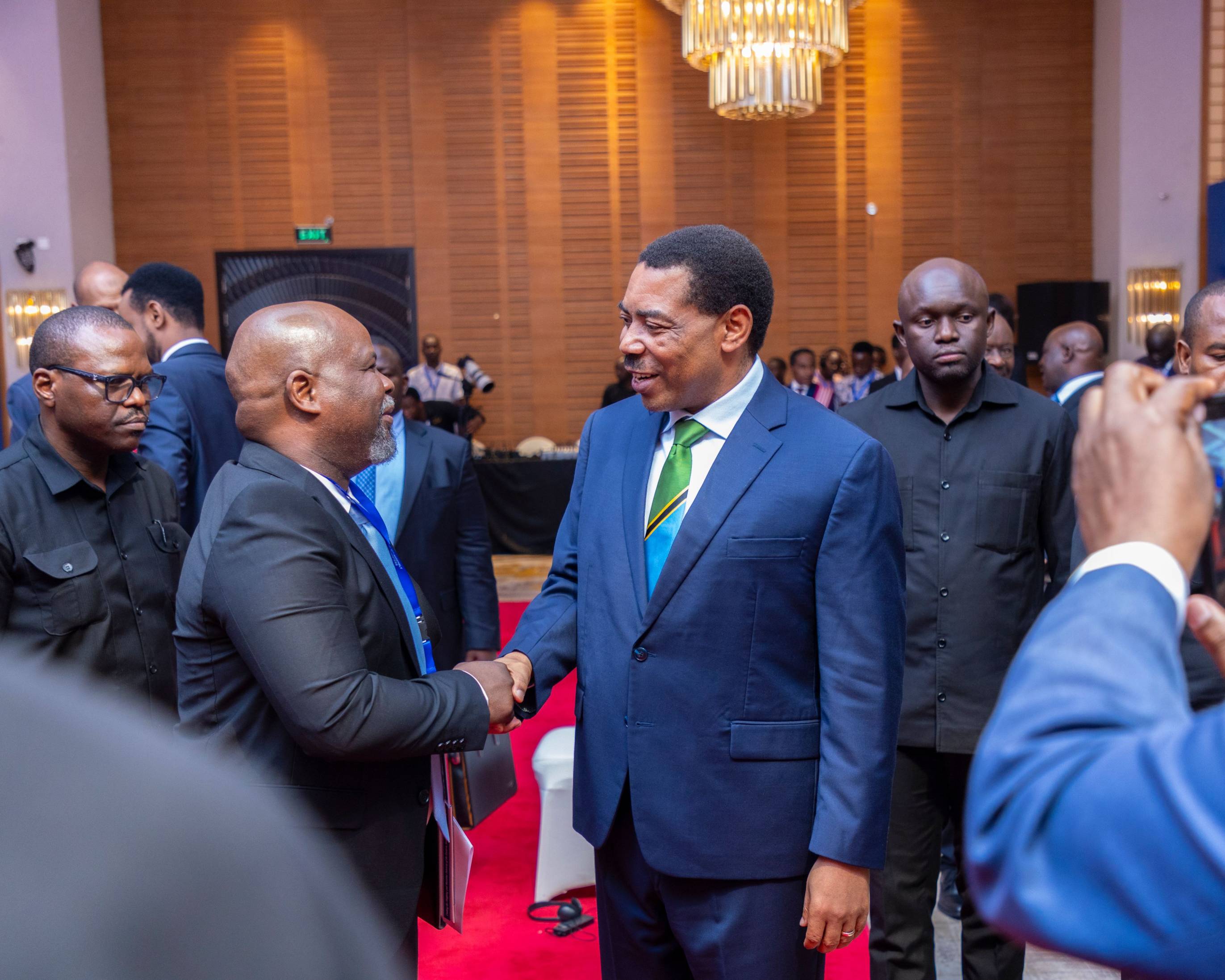
Tanzania's maritime infrastructure and established seafaring industry secured its selection to host the Maritime University for Eastern, Southern and Northern Africa (MUESNA), while Kenya's extensive training institutions and Botswana's strategic position as a land-linked country offer opportunities to anchor the university's regional network.
Tanzania has been selected to host the main campus, or Hub, of the proposed MUESNA, following a regional feasibility assessment that considered the suitability of several countries, including Kenya, Botswana and Tanzania.
The decision reflects Tanzania's established maritime industry, extensive Indian Ocean coastline, seafarer population and capacity to provide practical training opportunities.
Kenya voluntarily withdrew its bid, despite possessing considerable institutional and infrastructure advantages, leaving Tanzania and Botswana as the principal countries under consideration for hosting the main university campus.
Botswana, which presented a strong case based on its position as a land-linked country and its potential to serve the maritime transport requirements of inland economies, was subsequently recommended to host the first Spoke once the main Hub is established in Tanzania.
The findings are contained in a comprehensive feasibility study conducted by Professor Anish Hebbar, Associate Professor at the World Maritime University (WMU). The assessment examined maritime education and training (MET) capacity, infrastructure readiness, accessibility, stakeholder preferences, governance considerations and the suitability of prospective host countries across the Maritime Organization for Eastern, Southern and Northern Africa (MOESNA) region.
The proposed Hub-and-Spoke model is intended to ensure that MUESNA operates as a genuinely regional institution, drawing on the different strengths of member states rather than concentrating academic infrastructure and opportunities in the country hosting its headquarters.
Tanzania's selection is anchored in its established maritime ecosystem, which offers an important foundation for a university specializing in shipping, seafaring, marine engineering and other maritime disciplines.
Its extensive coastline, major ports, national fleet and seafarer population provide opportunities for students to gain practical exposure to shipping operations and maritime administration.
The Port of Dar es Salaam, in particular, provides an important platform for developing partnerships between the university, port authorities, shipping companies and maritime institutions.
Another important consideration is the presence of the Dar es Salaam Maritime Institute (DMI), an established maritime education and training institution that offers an existing platform for developing specialized programmes and strengthening professional skills.
The feasibility report also recognized Tanzania's Maritime Education and Training Fund as an institutional advantage, providing a framework for supporting skills development and investment in maritime training.
Its assessment of governance and institutional risks further strengthened Tanzania's position, with the country demonstrating a more favourable profile in considerations relevant to hosting a regional institution.
Professor Hebbar's assessment places particular importance on the relationship between maritime education and the availability of practical training facilities.
Unlike conventional university programmes, maritime education requires specialized infrastructure, including ship-handling simulators, engineering laboratories, workshops, training vessels and access to supervised sea-time opportunities.
Tanzania's maritime-sector depth provides a foundation for partnerships between the proposed university, shipping companies, port authorities, maritime administrations and other industry stakeholders.
"The strength of a maritime university is ultimately reflected in the competence of its graduates. Access to practical training, industry partnerships and sea-time opportunities must be central to its academic model rather than treated as additional components of the curriculum," Professor Hebbar said.
Although Tanzania emerged as the preferred location for the main Hub, Botswana demonstrated important advantages in the assessment, particularly in addressing the maritime education and transport requirements of land-linked countries.
Unlike coastal states, Botswana depends on regional transport corridors, neighbouring seaports and interconnected logistics networks to access international markets. Its position provides an opportunity for MUESNA to develop specialized programmes addressing the challenges facing countries without direct access to the sea.
These include shipping and logistics, port operations, multimodal transport, maritime trade facilitation, cargo management and the coordination of international supply chains.
The recommendation for Botswana to host the first Spoke after the establishment of the Tanzanian Hub recognizes the importance of extending the university's academic and technical presence beyond coastal maritime economies.
The arrangement also provides an opportunity to ensure that land-linked member states participate meaningfully in the development of regional maritime skills, research and professional training.
For Botswana, hosting the first Spoke would position the country as an important centre for maritime-related logistics education and regional transport integration.
It would also provide a platform for collaboration with neighbouring countries whose international trade depends heavily on ports and transport corridors outside their national borders.
The proposed model recognizes that maritime education in the MOESNA region must address both conventional seafaring requirements and the wider logistics systems connecting coastal ports to inland economies.
Kenya's voluntary withdrawal from the race to host the main university campus did not diminish its importance in the feasibility assessment. Indeed, the country demonstrated considerable institutional strength, particularly in the number of recognized maritime education and training institutions.
According to the report, Kenya has 11 recognized MET institutions, the highest number among the countries assessed, compared with Tanzania's four.
Ethiopia and Uganda each have two recognized institutions, while the Democratic Republic of Congo and Malawi have one apiece. Botswana, Burundi and Zambia have none.
This gives Kenya an important advantage in supporting MUESNA's academic and technical programmes through existing infrastructure, specialist expertise, research facilities and established training arrangements.
Rather than duplicating expensive facilities, the university's regional structure offers an opportunity to draw on Kenya's existing institutions for specialized training, professional certification, staff development and academic collaboration.
Kenya's maritime experience, including port operations, shipping, logistics and maritime administration, also provides a strong foundation for regional research and curriculum development.
Its established use of English in higher education and professional communication offers another advantage in integrating students, lecturers, researchers and visiting specialists from different member states.
Potential areas of collaboration include marine engineering, port operations, maritime safety, shipping and logistics, maritime law, digital shipping technologies and professional seafarer training.
The feasibility study therefore provides a basis for Kenya to participate as a major academic and technical partner within MUESNA's decentralised structure.
The Hub-and-Spoke arrangement is intended to distribute academic opportunities, specialized facilities and research activities across the MOESNA region.
Under the proposed model, Tanzania will host the main university campus, while selected member states will accommodate specialized centres, satellite facilities and centres of excellence according to their respective strengths and regional training requirements.
Botswana's recommendation to host the first Spoke provides an important starting point for this approach, particularly in addressing the needs of land-linked economies. Kenya's established maritime training institutions offer another substantial opportunity for specialized academic and technical collaboration.
Other member states, including Uganda, Zambia, Malawi, Burundi and Ethiopia, also stand to benefit from programmes addressing inland-waterway transport, shipping, logistics, port management and maritime-related disciplines.
The Democratic Republic of Congo has an important role through its extensive inland-waterway transport requirements and maritime trade connections.
The feasibility report found particularly strong stakeholder support for decentralizing the university's operations. During the consultative workshop, 94 per cent of respondents supported establishing centres of excellence in other member states.
This demonstrates that stakeholders expect MUESNA to maintain a meaningful presence beyond the country hosting its headquarters.
"The regional character of the university is critical. Establishing the main campus in one country should not translate into concentrating all academic opportunities and institutional benefits there. Centres of excellence provide a practical mechanism for sharing expertise, infrastructure and training opportunities across member states," Professor Hebbar said.
The model also provides an opportunity to maximize the use of existing facilities, reduce unnecessary duplication of expensive equipment and improve access to specialized training.
MUESNA is expected to address significant weaknesses in the region's maritime education system. According to the feasibility report, MOESNA member states have approximately 731 universities and higher education institutions, but only 21 recognised maritime education and training institutions.
The study found that 84.6 per cent of the 26 maritime agencies and institutions interviewed indicated that existing training infrastructure requires significant strengthening, particularly in maritime simulators, engineering workshops and sea-time opportunities.
Limited access to mandatory sea-time training emerged as the biggest obstacle preventing students from completing the requirements for professional certification as deck officers and marine engineers.
Other challenges include shortages of qualified instructors, inadequate funding, high training costs and weak partnerships between training institutions and the shipping industry.
The report recommends long-term partnerships with shipping companies, port authorities and maritime administrations to improve cadet placements and strengthen graduate employability.
MUESNA is expected to offer undergraduate and postgraduate programmes alongside professional certification and specialized training in marine engineering, maritime law, port management, shipping and logistics, environmental protection, maritime safety and the blue economy.
Emerging disciplines such as artificial intelligence, automation, maritime cybersecurity, green shipping and alternative marine fuels also feature among the recommended areas of training.
The feasibility study further highlights the region's limited contribution to the global seafarer workforce. MOESNA member states supplied only 4,947 seafarers in 2021, representing approximately 0.26 per cent of global seafarer supply.
Tanzania accounted for nearly 90 per cent of the regional contribution, while Kenya supplied only 185 seafarers despite having the highest number of recognized maritime training institutions.
The disparity highlights the challenge of translating institutional capacity and student enrolment into internationally certified graduates who secure employment in the global shipping industry.
The report also identified significant weaknesses in higher-level maritime education. Of the 21 institutions surveyed, only five offer bachelor's degree programmes, one offers a master's degree and none provides doctoral training in maritime disciplines.
These gaps limit research, innovation, policy development and the training of future maritime educators. International recognition of maritime qualifications also remains an important concern. The report identifies Kenya, Tanzania and Ethiopia among the MOESNA member states on the International Maritime Organization's White List, while Ethiopia is the only member state recognized by the European Maritime Safety Agency.
MUESNA is therefore expected to strengthen the harmonization of training standards, improve the international recognition of qualifications and enhance the mobility of African seafarers.
The study also identifies the under-representation of women in maritime education and employment, recommending scholarships, mentorship, affordable tuition, accommodation and stronger student welfare programmes to improve participation.
A shared regional investment
Tanzania's selection to host the main Hub reflects its maritime-sector foundation, coastal infrastructure, seafarer population and industry linkages. Botswana's recommended role as the first Spoke recognises the importance of incorporating land-linked economies into the university's institutional structure.
Kenya, meanwhile, retains a major opportunity to contribute through its extensive network of maritime training institutions, academic capacity, established port operations and specialist expertise.
The three countries illustrate the complementary strengths that MUESNA intends to bring together through its regional structure.
The success of the institution will depend on sustained political commitment, predictable financing, effective governance and strong industry partnerships, alongside a deliberate strategy for distributing academic opportunities and training facilities across member states.
A university headquartered in Tanzania, with Botswana hosting the first Spoke and Kenya contributing through specialised academic and technical centres, offers a framework for pooling regional resources and addressing maritime skills shortages.
Ultimately, the success of MUESNA will not be determined simply by the country in which its headquarters is located, but by its ability to develop a competitive regional maritime workforce, strengthen inland and coastal transport systems and expand Africa's participation in the global shipping industry.